
Primary Keyword: Step-by-Step Guidance for Junior Science Olympiads
Preparing for a Junior Science Olympiad is one of the best ways for students to develop scientific thinking, problem-solving skills, and a deeper understanding of science from an early age. Unlike school examinations, Olympiads are designed to test concepts, logical reasoning, and the ability to apply knowledge in unfamiliar situations.
Many students believe that Olympiads are only for “genius” students. The truth is that with the right guidance, consistent practice, and genuine curiosity, any dedicated student can excel in these examinations.
In this guide, we’ll walk you through the complete step-by-step process to prepare for Junior Science Olympiads and explain how you can make your preparation both effective and enjoyable.
What Are Junior Science Olympiads?
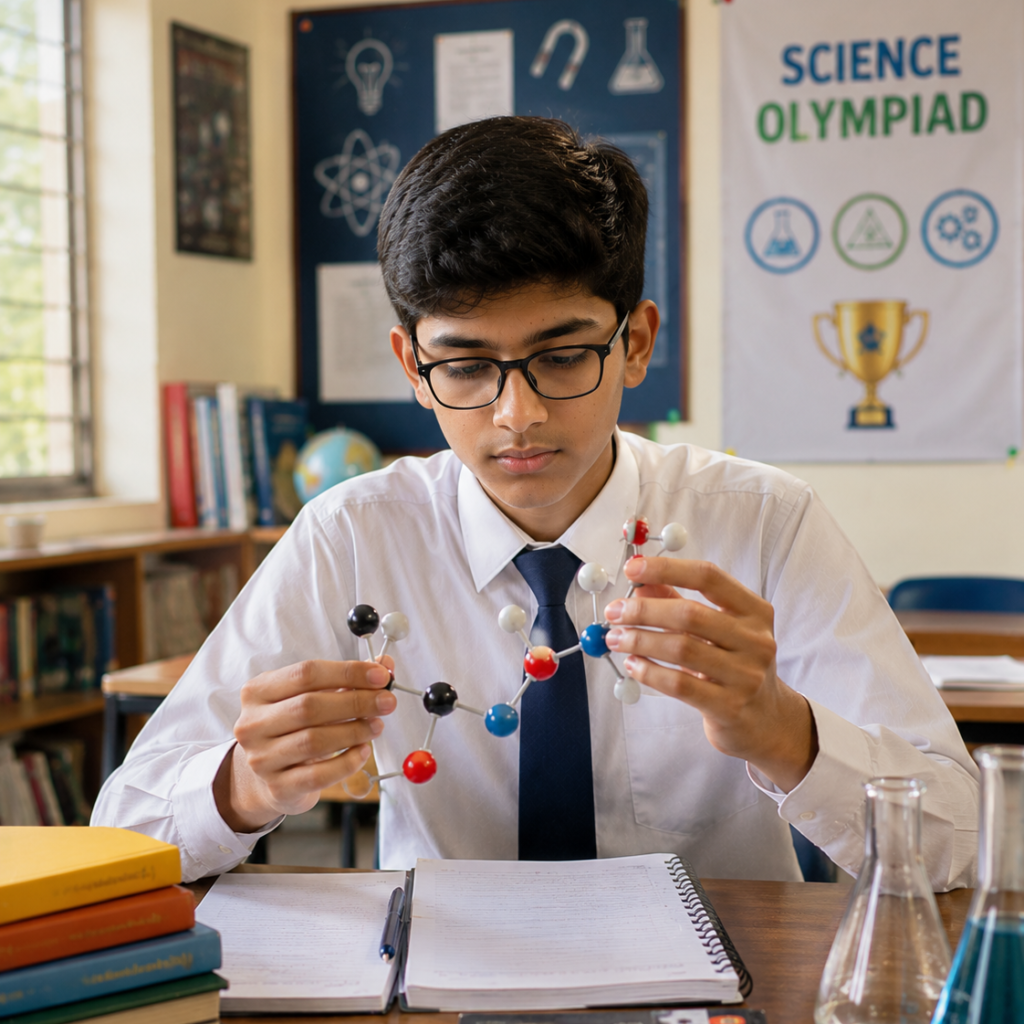
Junior Science Olympiads are competitive examinations that assess a student’s understanding of Physics, Chemistry, Biology, and Mathematics. They encourage scientific curiosity rather than rote memorization and provide a platform for students to compete at national and even international levels.
In India, students aspiring to represent the country in the International Junior Science Olympiad (IJSO) begin their journey through the National Standard Examination in Junior Science (NSEJS).
Whether your long-term goal is to become a scientist, engineer, doctor, or researcher, Olympiad preparation helps build a strong academic foundation.
Step 1: Understand the Exam Pattern and Syllabus
The first step is knowing what you’re preparing for.
Study the official syllabus and understand the topics covered in Physics, Chemistry, Biology, and Mathematics. While most concepts are based on the Class 9 and 10 curriculum, Olympiad questions require deeper conceptual understanding and application.
Understanding the exam pattern early helps you create a focused preparation strategy instead of studying randomly.
Step 2: Build Strong Concepts
Olympiads are not about memorizing facts—they are about understanding how science works.
Spend sufficient time mastering the fundamentals of every topic. Make sure you understand the “why” behind every formula, law, and scientific principle.
A student with strong conceptual clarity will always perform better than someone who has memorized answers.
Step 3: Study from the Right Resources
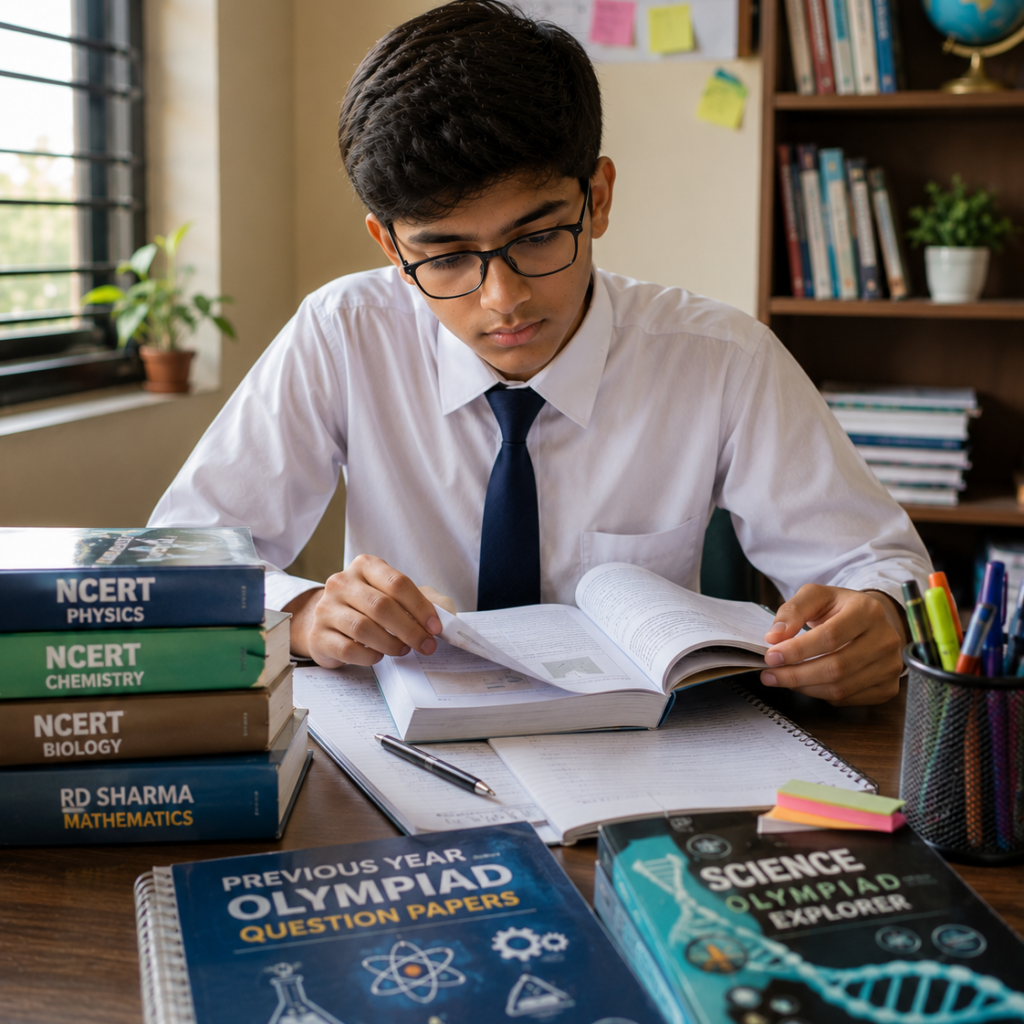
Start with your NCERT textbooks because they provide the foundation for most scientific concepts.
Once your basics are clear, move on to Olympiad-level reference books, practice question banks, and concept-based worksheets. Avoid using too many books simultaneously. It is better to thoroughly understand a few quality resources than to collect many.
Step 4: Develop a Daily Study Routine
Consistency is the key to Olympiad success.
A balanced daily routine may include:
- Revising previously learned concepts.
- Studying one new topic every day.
- Solving objective questions.
- Reviewing mistakes.
- Reading scientific facts and current developments.
Even two focused hours every day can produce excellent results over time.
Step 5: Practice Application-Based Questions
One of the biggest differences between school exams and Olympiads is the nature of questions.
Olympiad questions require students to apply concepts in new situations rather than recall memorized information. Regular practice improves analytical thinking, logical reasoning, and confidence.
Instead of aiming to solve hundreds of questions, focus on understanding why each answer is correct.
Step 6: Solve Previous Year Question Papers
Previous year papers are among the most valuable preparation resources.
They help students understand:
- The level of difficulty.
- Frequently tested concepts.
- Time management.
- Question patterns.
- Areas requiring improvement.
Attempt these papers under exam conditions to build confidence and improve speed.
Step 7: Revise Regularly
Revision is essential because concepts become stronger only through repeated practice.
Prepare short notes, formula sheets, diagrams, and concept maps that can be revised quickly before mock tests or examinations.
Students who revise consistently retain information much better than those who only study new topics.
Step 8: Learn from Your Mistakes
Every incorrect answer is an opportunity to improve.
After every practice session or mock test, carefully analyze your mistakes. Identify whether the error occurred due to weak concepts, calculation mistakes, or misreading the question.
Maintaining an “error notebook” helps prevent repeating the same mistakes.
Step 9: Stay Curious About Science
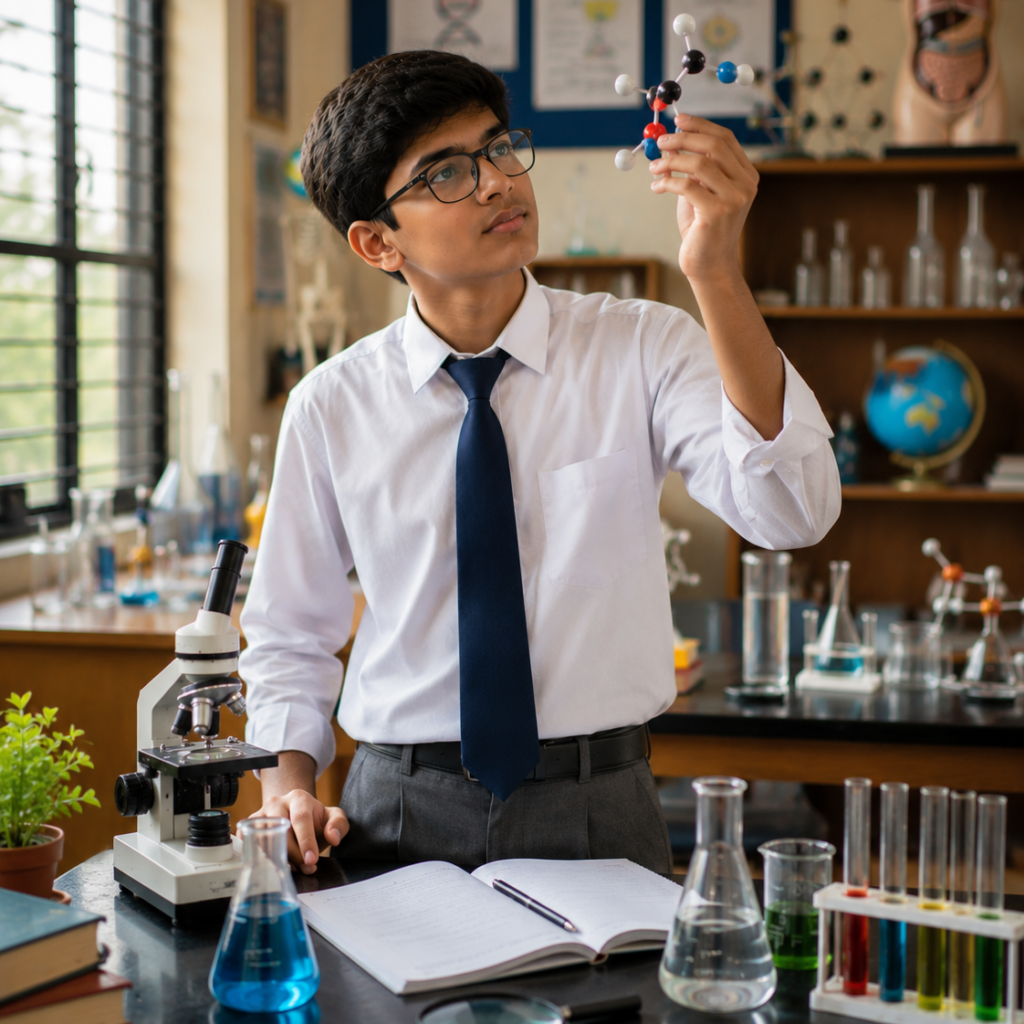
Olympiads reward curiosity.
Watch science documentaries, read popular science books, perform simple experiments, and explore how scientific principles work in everyday life.
Developing genuine interest in science makes preparation enjoyable rather than stressful.
Common Mistakes to Avoid
Many students reduce their chances of success by making avoidable mistakes such as:
- Memorizing instead of understanding concepts.
- Ignoring Mathematics while preparing for Junior Science Olympiads.
- Solving too few practice questions.
- Skipping revision.
- Comparing themselves with others.
- Studying without a structured plan.
Avoiding these mistakes can significantly improve your performance.
How Igniters For Tomorrow Helps Junior Science Olympiad Aspirants
Preparing for Olympiads requires much more than completing the syllabus. Students need conceptual clarity, scientific thinking, personalized guidance, and regular practice.
ExamsDaddy is an educational initiative by Igniters For Tomorrow, dedicated to helping students prepare for Olympiads, JEE, NEET, CUET, IAT, and board examinations through reliable educational resources and expert guidance.
At Igniters For Tomorrow, we follow a personalized approach because every student learns differently. Our experienced mentors identify individual strengths and areas for improvement, create structured study plans, conduct regular assessments, and provide continuous doubt-solving support. Small batch sizes, interactive classrooms, and a positive learning environment ensure that students remain motivated while building strong scientific fundamentals.
Our goal is not only to help students succeed in Junior Science Olympiads but also to develop confident learners who are prepared for future competitive examinations and scientific careers.
Final Thoughts
Junior Science Olympiads are an excellent opportunity for students to challenge themselves beyond the school curriculum and develop skills that last a lifetime. Success does not depend on extraordinary intelligence—it depends on curiosity, consistency, conceptual understanding, and smart preparation.
By following a structured study plan, practicing regularly, learning from mistakes, and seeking the right guidance, students can perform exceptionally well in Olympiad examinations and build a strong foundation for future academic success.
About ExamsDaddy
ExamsDaddy is an educational initiative by Igniters For Tomorrow, committed to empowering students from Classes 8–12 with high-quality resources for Olympiads, JEE, NEET, CUET, IAT, and board examinations. Through expert-written guides, preparation strategies, previous-year papers, career counselling, and personalized mentorship, we help students learn smarter, think scientifically, and achieve their academic goals with confidence.
Leave a Reply